
Both are natural sweeteners, and both are still added sugars. Here are the real differences in sugar type, glycemic index, minerals, and which one belongs on a vegan plate.
Maple syrup and honey get compared as if one must be the healthy choice and the other the guilty one. The honest answer is that both are added sugars, both carry small amounts of minerals and antioxidants, and neither is a health food. The real differences are more interesting and more useful than a simple winner.
Those differences come down to four things: the type of sugar each one is built from, how each affects blood sugar, the trace nutrients each carries, and whether the sweetener fits a vegan diet. Pure maple syrup is sucrose-based and plant-derived. Honey is a fructose and glucose mix made by bees.
This guide walks through each difference with the research behind it, then gives a straight answer on which to reach for depending on your diet, your blood sugar, and what you are cooking. Maple Terroir makes pure maple syrup, so the affirmative case for maple is here too, framed honestly rather than as a takedown of honey.
Neither maple syrup nor honey is a health food. Both are added sugars, both land at a similar calorie count per spoonful, and health authorities advise keeping all added sugars modest. Any article that crowns one of them a clean, guilt-free choice is overselling it.
Within that honest frame, the edges are small and specific. Maple syrup is built on sucrose and carries a slightly lower glycemic index, with research noting a relatively favourable glycemic and insulin response for a sweetener so high in sugar (Nutrients, 2022). It is also plant-based, which makes it the vegan option. Honey brings its own enzymes and antioxidants that shift with the flowers the bees visited.
So the better question is not which is healthier, but which is right for you. The sections below break down sugar type, blood sugar, nutrients, and diet fit, so you can match the sweetener to your kitchen and your needs rather than to a headline.
The quick comparison below pulls from peer-reviewed analysis and federal nutrition data. The detail behind each row follows in the sections after it.
Calorie figures reflect federal nutrition data for one tablespoon (USDA FoodData Central, 2026). Honey is a touch denser and runs a few calories higher per spoon, though portion size matters far more than that gap.
The biggest difference between the two sweeteners is the sugar each one is built from. Maple syrup is predominantly sucrose, the same sugar in table sugar, alongside small amounts of glucose and fructose (Nutrients, 2022). Honey is mostly a near-even mix of the two simple sugars, fructose and glucose, with only minor sucrose.
That difference shows up in two places. First, fructose is processed mainly by the liver, and a diet heavy in fructose draws more scrutiny from researchers, so honey's higher fructose share is worth noting for anyone watching that. Second, the glycemic index, a measure of how quickly a food raises blood sugar, tends to run slightly lower for maple syrup than for honey.
The same peer-reviewed analysis points to a relatively favourable glycemic and insulin response for maple syrup, which researchers link partly to its phenolic compounds and oligosaccharides rather than the sugar alone. The effect is modest, and both sweeteners still raise blood sugar. For anyone managing blood sugar, the safe reading is that maple syrup holds a small edge, and portion control matters more than the choice between them.
Both sweeteners carry more than empty calories, which is the main reason people reach for them over refined sugar. The amounts are small, so this is a tie-breaker rather than a headline.
Pure maple syrup is a notable source of manganese and also supplies zinc, calcium, potassium, and riboflavin, along with more than fifty bioactive compounds that researchers associate with antioxidant and anti-inflammatory activity (Nutrients, 2022). Honey carries its own enzymes and antioxidants, and the profile shifts with the flowers the bees visited, so a dark wildflower honey differs from a light clover one.
On antioxidant capacity head to head, a study comparing sweeteners placed maple syrup, honey, and brown sugar in the same intermediate band, all well above refined white sugar, corn syrup, and agave nectar (Journal of the American Dietetic Association, 2009). In other words, both maple syrup and honey beat refined sugar on this measure, and they land close to each other. The practical takeaway is simple: choose either over white sugar for the trace benefits, but do not treat a spoonful as a serving of vegetables.
This is where the choice often gets decided, because it is practical rather than nutritional. Pure maple syrup comes from the sap of maple trees, so it is plant-based and fits a vegan diet. Honey is made by bees, so most vegans leave it out. For a plant-based kitchen, maple syrup is the clear default.
For infants, the answer is the same for both, and the reasons differ. Public health authorities advise against giving honey to babies under one year because of the risk of infant botulism. Maple syrup does not carry that specific risk, but it is still an added sugar, and added sugars are not recommended under one year either. For a baby, the safe answer for both is to wait.
For everyday cooking, flavour and consistency decide it. Maple syrup is thinner and dissolves cleanly into coffee, oatmeal, dressings, and batters, with a woodsy caramel note. Honey is thicker and more floral, which suits tea, yogurt, and glazes where you want that distinct taste. Many people keep both, and reach for maple syrup when they want the sweetener to blend in and honey when they want it to stand out.
If maple syrup is the sweetener you choose, the source still matters. Maple Terroir makes pure, single-origin maple syrup from one family sugarbush in Quebec's Appalachian Mountains, with nothing added. What you taste is sap reduced to syrup, which is the form that carries the sucrose profile, the manganese, and the bioactive compounds described above. You can read the full process in our complete guide to Canadian maple syrup.
Because it is plant-based, our syrup is naturally vegan, and because it is pure maple with no fillers, it is not stretched with cheaper corn syrup the way imitation products are. The line between the real thing and the imitation is covered in our guide to pure maple syrup vs table syrup, and the flavour range across grades is in Grade A vs Grade B maple syrup.
Maple Terroir is the only Canadian maple syrup line that holds Ecocert, Canada Organic, and USDA Organic on its syrup at the same time, which means the purity behind these nutrition numbers has been audited by three separate bodies. When you want to taste the difference, our pure maple syrup collection and our organic maple syrup are the place to start.
Both are natural and both are added sugars. Pure maple syrup is sap reduced to syrup, and honey is gathered by bees. Neither processing story makes one a health food. The measurable differences are sugar type, glycemic response, and diet fit, not which one is more natural.
Not quite. Pure maple syrup carries manganese, zinc, calcium, potassium, riboflavin, and a band of antioxidants that puts it well above refined sugar in lab comparisons. The amounts are small, so it is still a sweetener, but it is not empty in the way white sugar is.
No. A slightly lower glycemic index does not turn maple syrup into a free pass. Both sweeteners raise blood sugar and both count toward daily added sugar. The edge is real but small, and portion size still does most of the work.
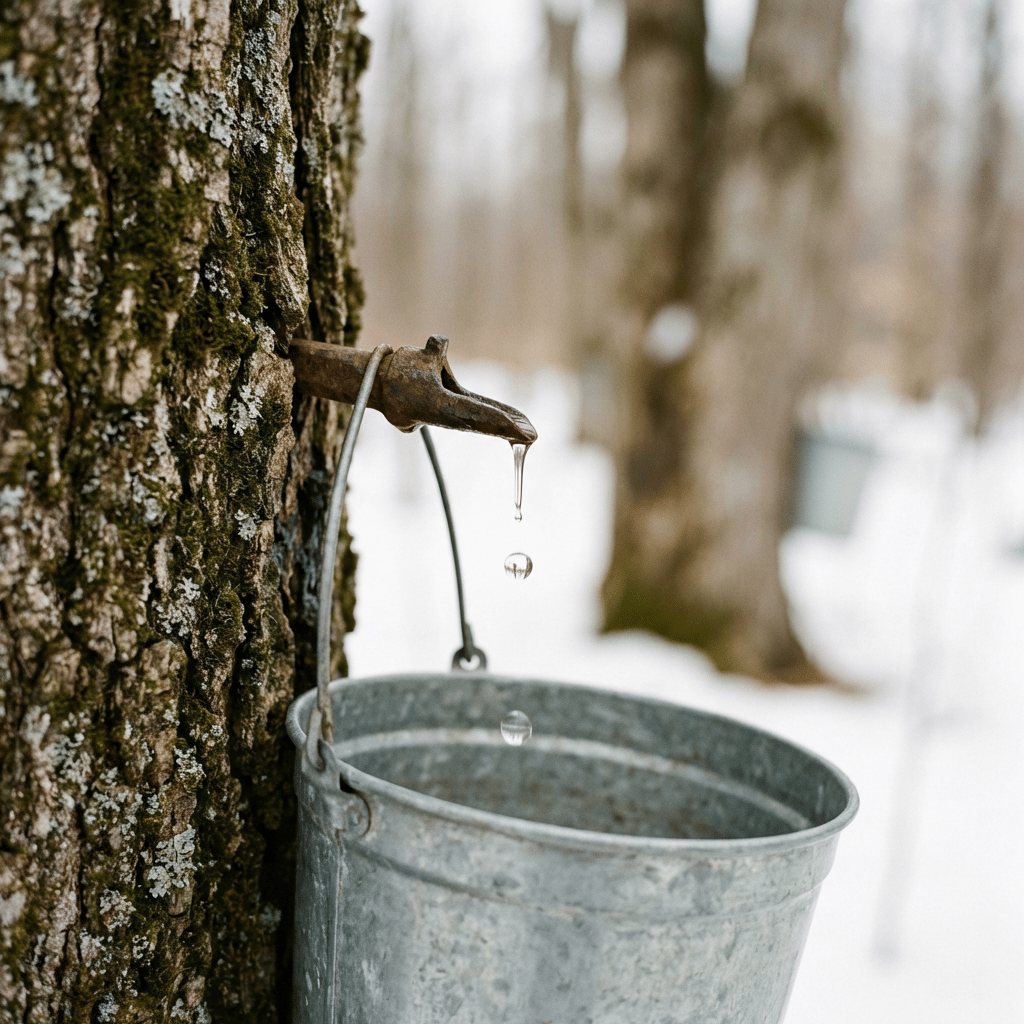
Maple Terroir is vegan by nature and certified by Ecocert, Canada Organic, and USDA Organic. One family farm in Quebec, nothing added.
Neither is a health food, because both are added sugars and deliver similar calories. The differences are small and specific rather than a clear win for one side. Maple syrup is sucrose-based with a slightly lower glycemic index, and it is vegan. Honey is a fructose and glucose mix with its own trace compounds. For most people the better choice comes down to diet, flavour, and how the sweetener is used, not a large health gap.
Maple syrup tends to have a slightly lower glycemic index than honey, and research notes a relatively favourable glycemic and insulin response for maple syrup given its high sugar content. The gap is modest, and both still raise blood sugar. Anyone managing blood sugar should treat each as an added sugar and keep portions small.
Yes. Pure maple syrup is made from the sap of maple trees, so it is plant-based and suitable for a vegan diet. Honey is produced by bees, so most vegans do not consider it vegan. This is one of the clearest practical differences between the two sweeteners.
Public health authorities advise against giving honey to infants under one year old because of the risk of infant botulism. Maple syrup does not carry that specific risk, but it is still an added sugar, and added sugars are not recommended for babies under one year. For infants, the safe answer for both is to wait.
Both carry small amounts of minerals and antioxidants, and both test as intermediate in antioxidant capacity, well above refined sugar. Maple syrup is a notable source of manganese and also contains zinc, calcium, potassium, and riboflavin. Honey carries its own trace enzymes and antioxidants that vary by floral source. The amounts in a normal serving are small for both, so neither should be eaten as a nutrient source.
Maple syrup has a thinner consistency and a woodsy, caramel flavour that dissolves cleanly into coffee, oatmeal, and baked goods. Honey is thicker and more floral, and its flavour varies with the flowers the bees visited. For a neutral pour that mixes easily, many bakers reach for maple syrup. For a distinct floral note, honey wins. Both replace refined sugar in most recipes with small adjustments to liquid.