Our Story Products Terroir Blog Wholesale Shop Now
Back to the Maple Terroir Blog

Quebec vs Vermont Maple Syrup: What Actually Sets Them Apart

Both regions tap from the same Appalachian forest ecosystem. The real differences come from production volume, regulation, and what each side optimizes for.

By Maple Terroir 10 min read
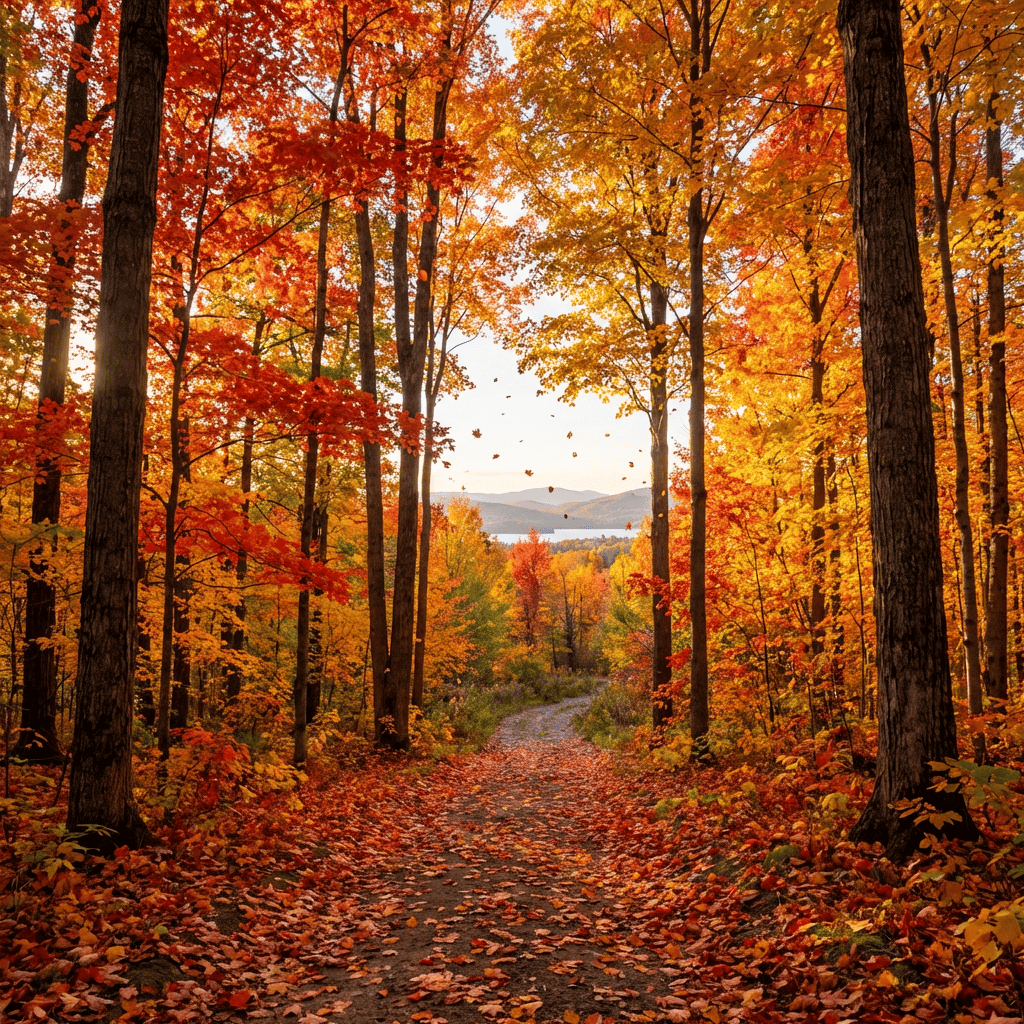
Appalachian Mountain forest in autumn, the shared maple ecosystem that spans Quebec and Vermont

The Quebec vs Vermont maple syrup question gets asked more than almost any other in the maple aisle. Shoppers picking between a Quebec bottle and a Vermont bottle want to know which one is more authentic, which one tastes better, and which side of the border produces the real thing. Most of the answers floating around online start from regional pride rather than from how the syrup actually gets made.

The honest comparison starts with the trees. Quebec and Vermont both tap sugar maples in the Appalachian Mountains, the same mountain range, the same forest ecosystem, the same soil profile near the border. The differences that matter are not biological. They are differences in scale, regulation, and what each region's producers have chosen to optimize for over the last fifty years.

This guide walks through every one of those differences: production volume, grading rules, the shared Appalachian connection, the craft scene Vermont built and the industrial scale Quebec built, what a blind tasting actually reveals, and how to decide which bottle belongs on your kitchen counter. The takeaway, stated up front, is that the farm matters more than the border.

01 Production Volume

Quebec Outproduces Vermont by Roughly Five to Six Times

Quebec produces about 90 percent of Canada's maple syrup and roughly 70 percent of the world supply, working out to around 14.3 million gallons in a typical year. Vermont produces about 50 percent of total US output, the largest of any US state, at roughly 2.5 million gallons annually. Quebec's volume runs roughly five to six times Vermont's.

The scale gap is geographic before it is industrial. Quebec has far more maple forest land than Vermont, and the province has spent decades building the harvest, boiling, and bulk-handling infrastructure to match. Vermont's maple industry is genuinely large for the United States, but the underlying forest footprint is much smaller than Quebec's.

For shoppers, the practical effect is supply. The majority of bottles sold globally as "pure maple syrup" trace back to Quebec, including most private-label and grocery-aisle product on both sides of the border.

Single-origin Quebec maple syrup, part of the 70 percent of world supply that Quebec produces each year
02

Regulation and Grading

Canada enforces a strict mandatory grading system. In Quebec, Producteurs et Productrices Acericoles du Quebec (PPAQ) inspects, classifies, and certifies syrup before it reaches consumers, with grade categories (Golden, Amber, Dark, Very Dark) tied to colour, clarity, and flavour standards. Bulk syrup must pass PPAQ inspection to be sold as graded Canadian maple syrup. Producers across Quebec follow the same rules, so a Quebec Amber from one farm and a Quebec Amber from another farm sit within a defined corridor.

Vermont follows the US federal grade system, which mirrors the Canadian colour categories, but enforcement on the US side is voluntary at the producer level. Vermont's state-level standards are stricter than the federal floor, and reputable Vermont producers grade carefully, but the system gives producers more freedom to release syrup that sits outside the standard corridor. That flexibility is the structural reason the Vermont craft maple scene exists.

The trade-off is consistency versus experimentation. Quebec's system produces predictable, well-graded syrup at scale. Vermont's system makes room for producers who want to push beyond the standard corridor.
03

The Appalachian Connection

The Appalachian Mountains run from the southern United States up through New England, across the Vermont border, and into southern Quebec. The forest does not stop at the line on the map. Sugar maples on the Quebec side and sugar maples on the Vermont side share the same species, very similar soil chemistry, comparable elevation, and a near-identical freeze-thaw cycle that drives sap flow each spring.

The implication is straightforward. The terroir differences between two farms in the same Quebec valley, or between two farms in central Vermont, are often larger than the average difference between a Quebec Appalachian farm and a Vermont Appalachian farm. Soil microvariation, tree age, slope orientation, and boil method all matter. The border, for the most part, does not.

Maple Terroir taps from one family-owned farm in Quebec's Appalachian Mountains, the same mountain range that runs through Vermont. The "terroir" we trade on lives at the farm level, not the provincial level. The full terroir page explains how the specific microclimate of that one farm shapes the syrup.

04

Craft vs Industrial Production

Vermont's voluntary grading and smaller average producer size made room for a craft scene. Wood-fired evaporators that impart smoke notes, bourbon-barrel-aged syrup, vanilla-infused syrup, single-tree bottlings: most of these formats were popularized by Vermont producers selling at farmers' markets and direct-to-consumer. Vermont built brands like Runamok, Crown Maple, and dozens of smaller operations that compete on experimentation rather than volume.

Quebec runs both ends of the spectrum. The province dominates industrial-scale supply, including most of the syrup that ends up in private label and food service, but Quebec also has strong craft producers operating at smaller volumes with high traceability and certification. Escuminac, O d'Or, and Maple Terroir all sit in that single-origin craft tier on the Quebec side.

The lazy framing is "Vermont is craft, Quebec is industrial." The accurate framing is that both regions produce both, and the question is which specific producer the bottle in your hand came from.

05

Flavour Differences in a Blind Tasting

Here is the honest answer most maple marketing avoids: most consumers cannot reliably distinguish Quebec from Vermont in a blind tasting of the same grade. A Grade A Amber from a well-run Quebec farm and a Grade A Amber from a well-run Vermont farm sit close enough on flavour that a casual taster scores them at chance.

What does show up in a blind tasting is the farm. Two Quebec Ambers from different valleys can taste meaningfully different from each other. A wood-fired Vermont Dark tastes meaningfully different from a steam-evaporated Vermont Dark. Boil method, tree population age, harvest timing, and soil all push the flavour profile around. Province of origin does not, in any reliable way that survives a blinded comparison.

The practical version of this rule, for shoppers: do not pay a premium for a Vermont label assuming it will taste different from a Quebec label of the same grade. Pay a premium for verified single-origin and a producer you can name. That premium buys a real flavour difference. The Grade A vs Grade B explainer covers how grade affects flavour in more detail.

06

Which Should You Buy?

Pick by what you value, not by which side of the border the bottle came from.

If volume, affordability, and consistent grading matter most, Quebec wins on every dimension. The PPAQ system enforces predictability, and Quebec's scale keeps cost per litre lower than Vermont's small-batch craft tier.

If experimental formats like bourbon-barrel-aged, wood-fired, or infused syrup matter most, Vermont's craft scene is the deeper bench. Quebec has these formats too, but Vermont built the category and still leads it.

If verified single-origin, third-party certification, and Appalachian terroir from one farm matter most, the bottle to find is single-origin from a Quebec Appalachian producer with strong certifications. Maple Terroir taps from one family-owned farm in Quebec's Appalachians, the same mountain range as Vermont, and holds three organic certifications: Ecocert, Canada Organic, and USDA Organic. Most maple syrup from either region is blended supply from many farms with no traceable origin. The organic certification page covers what each certification actually verifies.

Common Myths

Three Myths About Quebec vs Vermont Maple Syrup

"Quebec maple syrup is always blended industrial supply."

Wrong. Quebec produces the majority of industrial maple supply, but the province also has strong single-origin craft producers. Escuminac, O d'Or, and Maple Terroir all bottle traceable syrup from one farm or one valley. The Quebec craft tier is smaller than Vermont's by share but real in absolute terms.

"Vermont maple syrup is always craft and small-batch."

Wrong. Vermont has industrial-scale producers and grocery-aisle blends with no single-origin claim, just like Quebec. The Vermont craft scene is loud and well-marketed, but it does not cover the entire state's output. A bottle that says "Product of Vermont" tells you the state, not the producer or the batch size.

"You can taste the difference between Quebec and Vermont."

Usually not, in a blind test of the same grade. Farm-level differences (soil, tree age, boil method, harvest timing) are bigger than border-level differences. Pay for verified single-origin and a named producer, not for the province name on the front of the bottle.

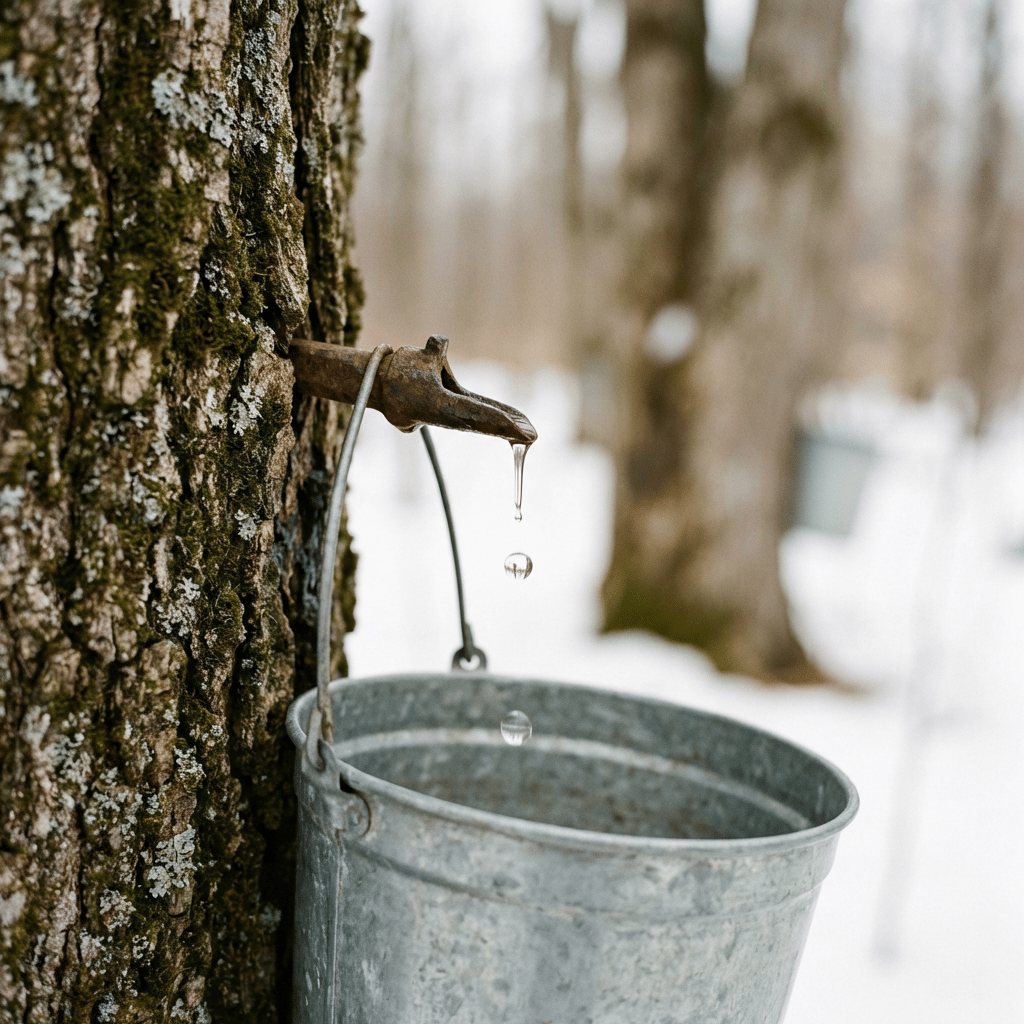
Maple sap dripping into a collection bucket in a Quebec Appalachian sugar bush

Same Mountain Range. One Farm.

Maple Terroir is single-origin Quebec maple syrup from one family-owned farm in the Appalachian Mountains, the same range that runs through Vermont. Triple-certified organic.

Frequently Asked

Quebec vs Vermont Maple Syrup FAQ

Neither region is universally better. Quebec producers operate at much larger volume and work under a strict mandatory grading system run by PPAQ. Vermont producers have more freedom to experiment because grading is voluntary on the US side, which has produced a thriving craft scene. The bigger quality variable is the individual farm, not the province or state.

Quebec has roughly five times the maple forest land that Vermont has, and the province has a centralized industry organization, Producteurs et Productrices Acericoles du Quebec (PPAQ), that has invested in production infrastructure for decades. Quebec produces about 70 percent of the world supply and roughly 90 percent of Canada's output. Vermont leads US production, but US output is a small fraction of Canada's.

Neither region is more authentic. Both tap from the same Appalachian forest ecosystem, the same sugar maple species, and very similar soil and climate near the border. Authenticity comes from single-origin sourcing and verified certification, not which side of the border the tree stands on.

Most consumers cannot reliably distinguish Quebec from Vermont in a blind tasting of the same grade. Farm-level terroir differences, soil, microclimate, tree age, and boil method, are larger than the average difference between provinces. A Grade A Amber from one Quebec farm and a Grade A Amber from one Vermont farm can easily taste more different from each other than two Quebec syrups.

Maple Terroir is single-origin from one family-owned Quebec farm in the Appalachian Mountains, the same mountain range that runs through Vermont. Every bottle traces to one farm and one harvest. The syrup holds three organic certifications: Ecocert, Canada Organic, and USDA Organic. Most maple syrup from either region is blended supply from many farms with no traceable origin.